Pope Francis to be buried at Santa Maria Maggiore, a historic break from tradition
The Vatican announced this week that Pope Francis will be buried in the Basilica of Saint Mary Major (Santa Maria Maggiore), a significant break from centuries of burial tradition. The funeral will take place Saturday morning in St. Peter’s Square, where global leaders will gather to honor the first Latin American pope.
Pope Francis, who passed away on Monday at the age of 88 due to a stroke and cardiac arrest, chose the iconic fifth-century basilica as his final resting place. The move symbolizes his humble leadership and devotion to the Virgin Mary, which defined much of his papacy.
A Humble Pope, A Personal Choice

Throughout his 12-year papacy, Pope Francis repeatedly distanced himself from the grandeur associated with the Vatican. Instead of living in the Apostolic Palace, he chose the modest Santa Marta residence. His burial choice echoes this humility.
In his final testament, the pope requested a simple burial on the earth without ornate decoration. The inscription on his grave will be limited to his papal name in Latin: Franciscus. Unlike his predecessors, his cypress coffin will not be encased in lead.
Santa Maria Maggiore: A Site Steeped in History
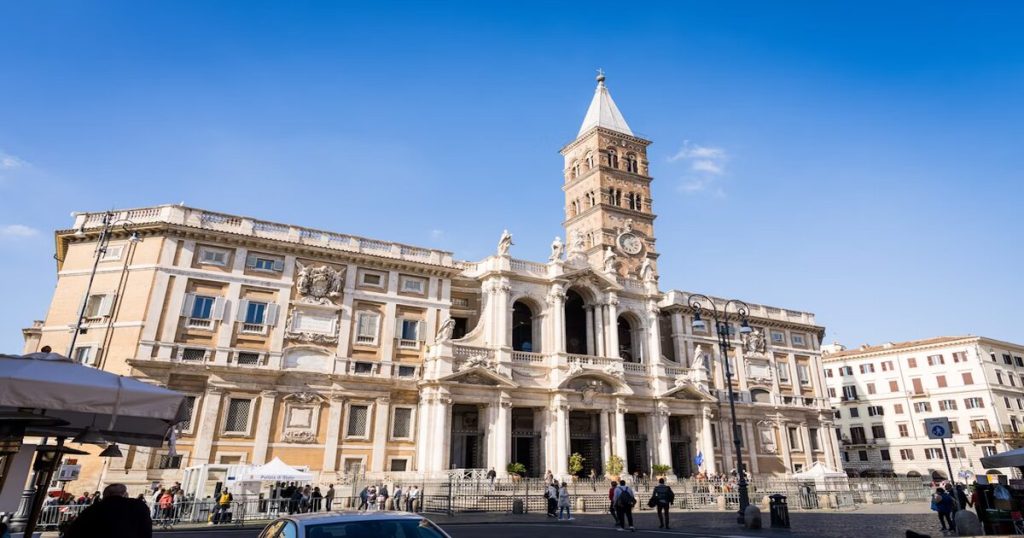
Santa Maria Maggiore is one of the four principal papal basilicas in Rome. Constructed during the 5th century, it is famous for its early Christian design and stunning mosaics. It contains the tombs of seven former popes but none from recent history.
Clement IX died in 1669 and was the last pope buried there. Pope Francis will be the first pope in over a century to be buried outside the Vatican. Modern times’ only exception was Leo XIII, buried in the Church of Saint John Lateran in 1903.
The basilica’s meaning to Pope Francis is immeasurable. Being a devoted Mary believer, he often visited its holy icon, the Salus Populi Romani. He even gave golden roses to the site in 2023, showing his love and respect.
A Funeral of Global Importance
Pope Francis’s funeral is set for Saturday at 10 a.m. in St. Peter’s Square. The event will draw heads of state and religious leaders from across the globe. Those expected to attend are U.S. President Donald Trump, Argentina’s President Javier Milei, Brazil’s President Luiz Inácio Lula da Silva, and Ukraine’s President Volodymyr Zelenskyy.
Cardinals worldwide have gathered in Rome this week to oversee the arrangements. On Wednesday morning, a procession will move the late pope’s body from Santa Marta to St. Peter’s Basilica, where the faithful can pay their last respects.
Ancient papal rituals are also underway. These include the ceremonial breaking of the Fisherman’s Ring and papal seal, which prevents misuse after a pope’s death.
A Conclave for a New Pope
After the funeral, the Vatican will prepare for the conclave to choose the new pope. This secret process typically starts 15 to 20 days after a pope’s death, and the 135 cardinals can vote.
Pope Francis appointed nearly 80% of these cardinal electors, but his successor cannot share his progressive views. The cardinals will meet in what are known as General Congregations to discuss the Church’s needs and profile potential candidates.
The election will be held in the Sistine Chapel. White smoke rising from its chimney will signal the selection of a new pope.
Honoring a Legacy of Reform
Renowned for pushing change in the Roman Catholic Church, Pope Francis’s leadership was often bold and controversial, from addressing sexual abuse crises to improving the Vatican’s financial openness.
He also grew increasingly liberal in his opinions on disadvantaged groups like LGBTQ populations. His forward-looking attitude often put him at odds with more traditional Church members.
Despite the opposition, he remained true to his goal of a more service-minded, humble, and inclusive Church.
Featured Photo: Unsplash/Nick Castell