
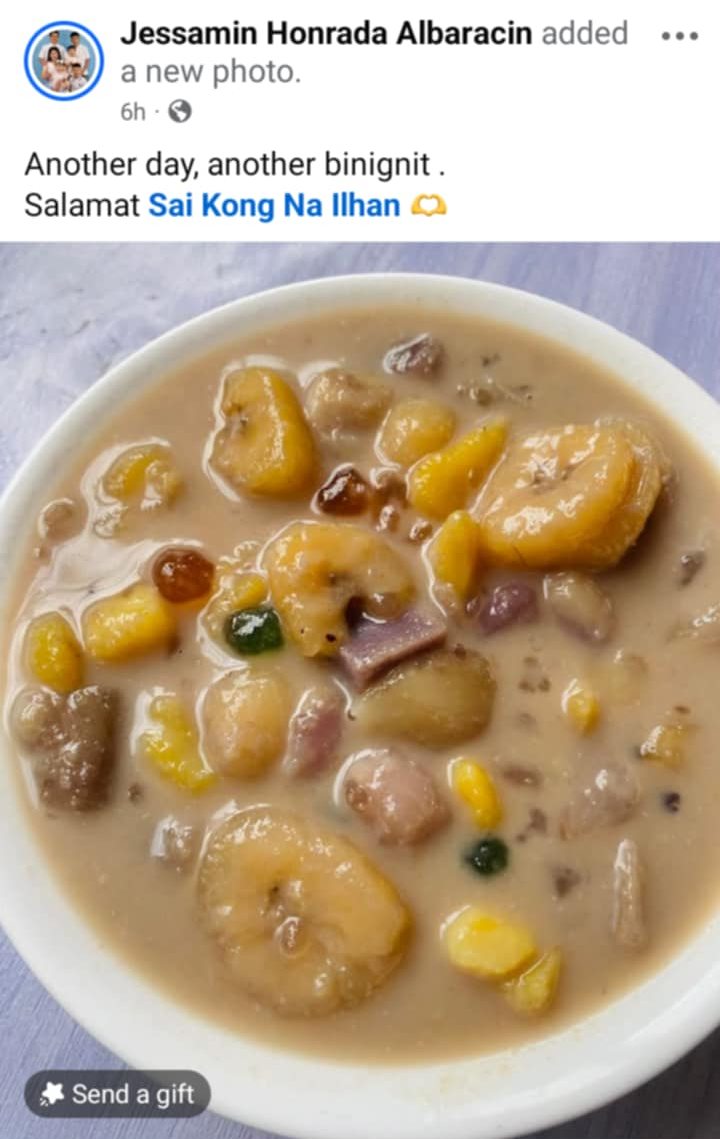
Binignit Entries Holy Week 2025
Binignit: Cebu’s Comforting Holy Week Tradition in a Bowl
As Holy Week approaches in the Philippines, especially in the Visayas region, one familiar aroma fills many Filipino homes—the rich, coconut-sweet scent of binignit, a traditional warm dessert soup made with root crops, fruits, and glutinous rice cooked in coconut milk. In Cebu, binignit is more than just a seasonal snack—it’s a cultural and spiritual staple.
A Glimpse Into Binignit’s Origins
Binignit traces its roots to the Visayas and Mindanao regions of the Philippines. While versions of it can be found across the country under different names—ginataang halo-halo in Luzon or tabirak in parts of Mindanao—binignit remains distinct in the Cebuano-speaking areas.
The dish originated in pre-colonial Filipino food culture, where coconut milk was commonly used for savory and sweet preparations. Over generations, binignit evolved as a meatless comfort food that met the religious dietary restrictions of Lenten fasting and abstinence, particularly on Good Friday.
Binignit Entries Holy Week 2025 in my News Feed
As I am here in France, I don’t have the ingredients for cooking Binignit. Sad to say, I am not a good cook. I prefer to receive and eat Binignit from neighbors and relatives back in the day. Hahaha! Here I am, salivating on my news feed as some friends show off their Binignit Entries for Holy Week 2025. If only they could send it to me here in France, I am more than willing to receive Binignit with all my heart. LOL
First Entry – Rufela’s Binignit
Rufela is currently in Denmark and is finding ways to cook Binignit with limited ingredients. She is fortunate to have an Asian store nearby. While in Denmark, she has the time to prepare Filipino meals and other snacks, such as Puto (sweetened glutinous rice) and Budbud. If only we were neighbors, I would be a frequent visitor to eat Filipino snacks with her.
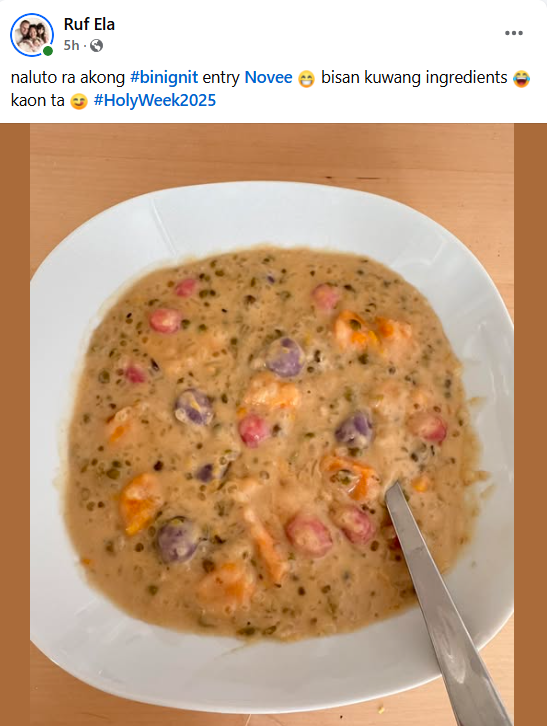
Photo by Rufela
Second Entry – Ferna’s Binignit
Ferna is a tour guide in Dumaguete and is spending time with her family and relatives. As a family tradition, all relatives gathered on their big lawn, preparing Binignit under the freshness of shady trees. I am just jealous of that big bowl of Binignit.
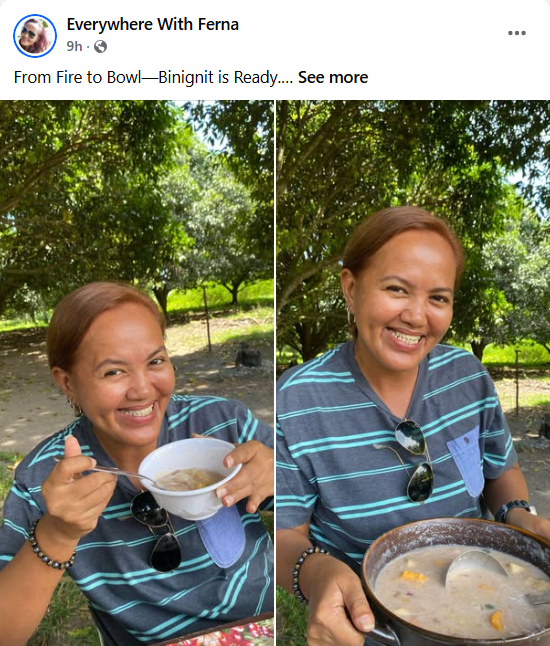
Photo by Everywhere with Ferna
Third Entry – Hanna’s Binignit
Hanna is a former high school classmate who owns a food tray business in Talisay City, Cebu. As you can see, she has colorful Binignit on my news feed. If you’re around Cebu, don’t hesitate to order food trays from her.

Photo by Kusina ni Haning
Fourth Entry – Glez’s Binignit
Glez is one of our authors here on Island Journal PH, but she is currently busy taking care of her kids, so she is on a break. She sent her Binignit entries to our group chat.
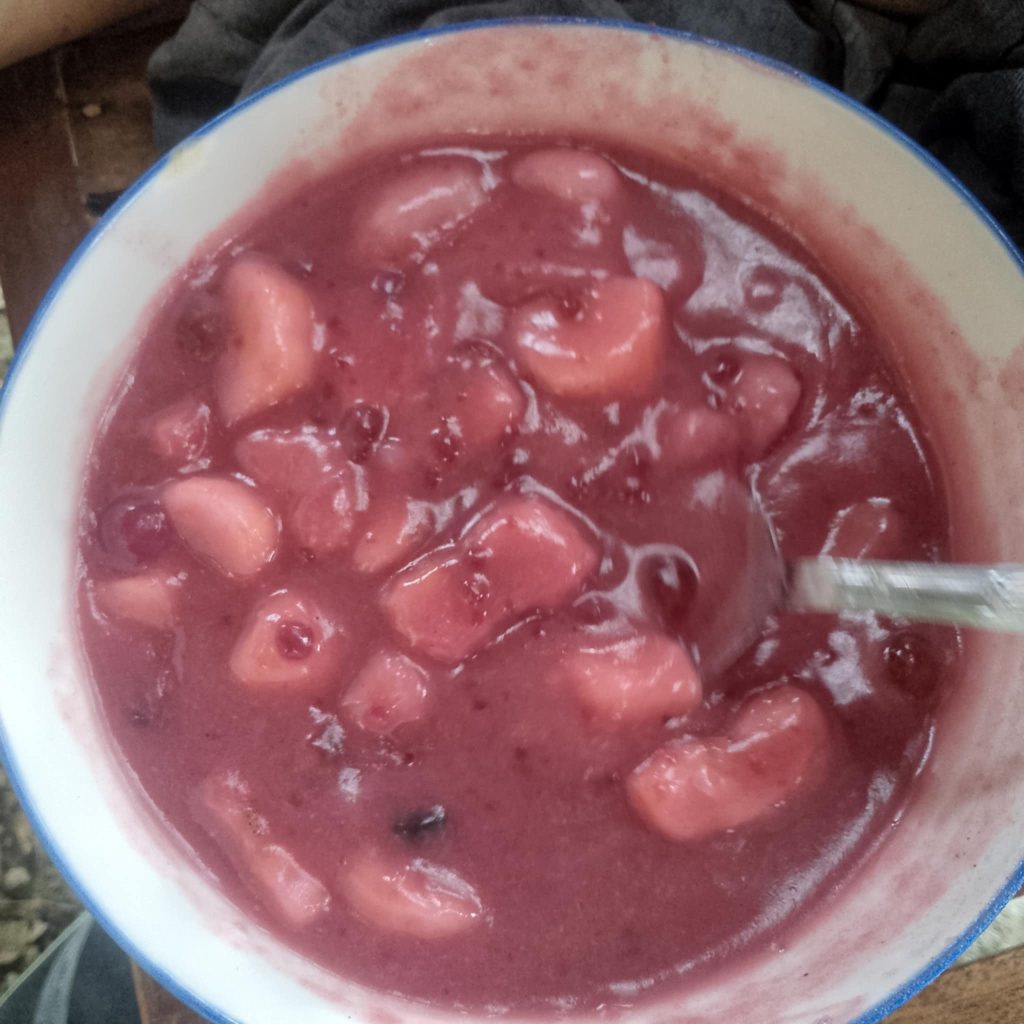
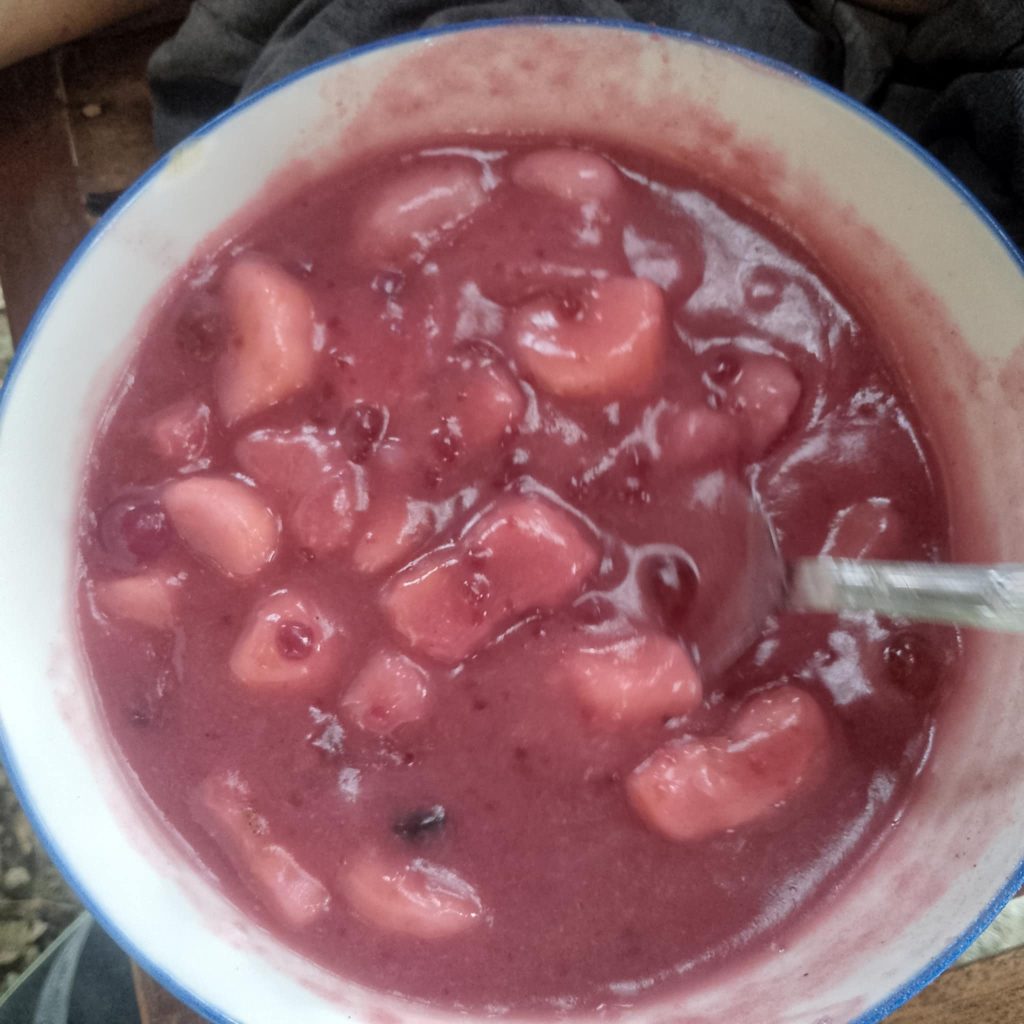
Photo by Glez
Fifth Entry – Jessamin’s Binignit
This is what I’ve been talking about. Damn, woman, you’re so lucky to receive Binignit from family friends.
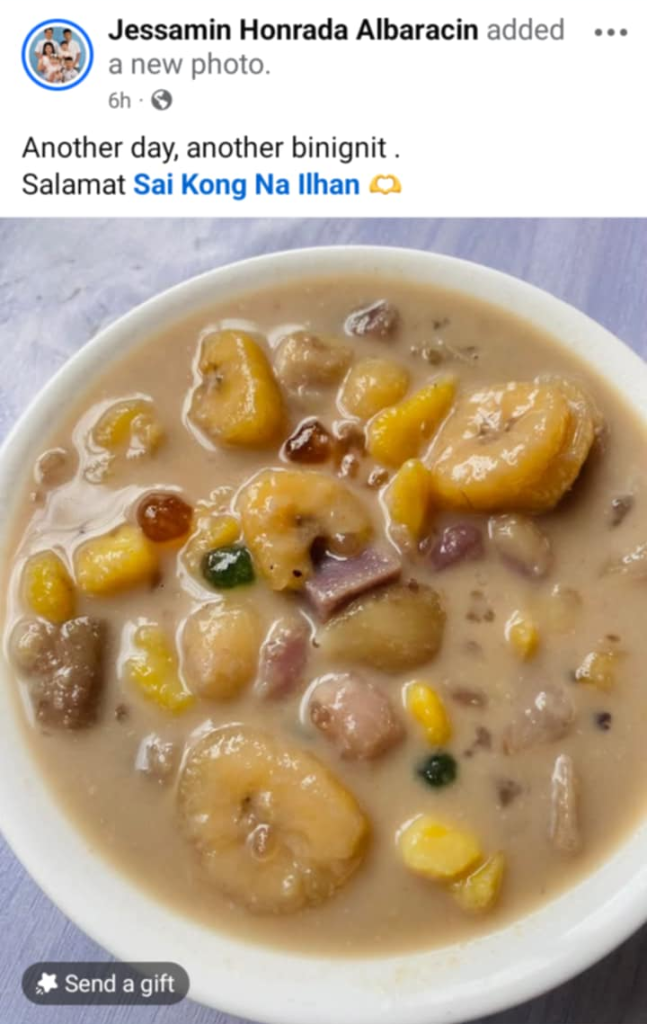

Photo by Jessamin
How Binignit Is Prepared
Binignit is renowned for its rich texture and harmonious blend of sweetness and creaminess. Here’s how it’s typically prepared:
Ingredients:
- Root crops: sweet potatoes (kamote), taro (gabi), and purple yam (ube)
- Saba bananas, peeled and sliced
- Jackfruit strips (langka) for fragrance and flavor
- Glutinous rice (pilit) or sticky rice balls
- Sago pearls (similar to tapioca)
- Coconut milk (thick and thin versions)
- Brown sugar (or muscovado for a deeper flavor)
- A pinch of salt to balance the sweetness
Cooking Steps:
- Boil the sago pearls separately until they are translucent, then set them aside.
- In a large pot, simmer the root crops in thin coconut milk until tender.
- Add bananas, jackfruit, and glutinous rice, then pour thick coconut milk.
- Stir constantly to prevent the coconut milk from curdling.
- Sweeten with brown sugar and add the pre-cooked sago.
- Simmer until all ingredients are fully cooked and the flavors have melded together.
Binignit is typically served warm, though some prefer it chilled after a few hours in the fridge.
Binignit and Holy Week: A Cebuano Tradition
In Cebu and other parts of the Visayas, binignit is closely tied to Holy Week, particularly on Good Friday, when Catholics observe fasting and abstain from meat. It’s a complete, satisfying, filling dish that aligns with religious practice.
Its ingredients are affordable and locally available, making it a communal dish that brings families together in the kitchen. Preparing binignit has become an intergenerational activity in many Cebuano households, with recipes passed down from grandparents to grandchildren.
Beyond its religious context, binignit has become a symbol of comfort, simplicity, and unity—a dish that speaks to the soul as much as it satisfies the body.