

Japan PM Ishiba begins bold diplomatic tour mission to Vietnam, Philippines to strengthen security
Japan bolsters security relations with Southeast Asia as Japan PM Ishiba (Prime Minister Shigeru Ishiba) readies for a trip to Vietnam and the Philippines from April 27 to April 30. The visit is a significant step in deepening strategic ties in the region against the backdrop of increasing concern about China’s expanding activity in the South China Sea.
The four-day visit will likely focus on military cooperation, defense equipment assistance, intelligence sharing, and humanitarian plans, highlighting Japan’s expanding role as a stabilizing presence in the Indo-Pacific.
Then, Japan PM Ishiba will make his first stop in Vietnam to hold talks with General Secretary To Lam and other senior Vietnamese officials. One key element will likely be Japan’s new initiative to include Vietnam in its Official Security Assistance (OSA) framework, which will be a new measure providing defense equipment at no cost to countries with whom Japan shares values and strategic considerations.
If it were approved, Vietnam would receive direct military support from Tokyo, enhancing the country’s defense capabilities, especially to counter maritime tensions in the South China Sea, where Vietnam and China share overlapping territorial rights emanating from their respective maritime laws.
The two countries hope to put pen to paper on a memorandum in March 2026 to expand long-term defense and security cooperation. Besides security, Prime Minister Ishiba will also tour the Vietnam-Japan University in Hanoi, which has come to symbolize the strong educational and cultural cooperation between the two countries.
From Vietnam, Japan PM Ishiba will travel to Manila, where he is scheduled to meet with President Ferdinand Marcos Jr. Talks between the two leaders are expected to center on two major military agreements.
First, Japan and the Philippines plan to launch negotiations on a General Security of Military Information Agreement (GSOMIA). It would allow both countries to exchange sensitive military intelligence with each other and give them a faster response to new threats in the region.
Second, both sides are prepared to negotiate an Acquisition and Cross-Servicing Agreement (ACSA). The agreement would enable Japan and the Philippines to supply each other with ammunition, fuel, and other logistical support during joint exercises or an emergency.
The agreement would be a major step forward in defense relations between Tokyo and Manila if concluded, as the Philippines routinely interacts with Chinese vessels at sea in the West Philippine Sea.
Japan PM Ishiba visit may have possible regional implications
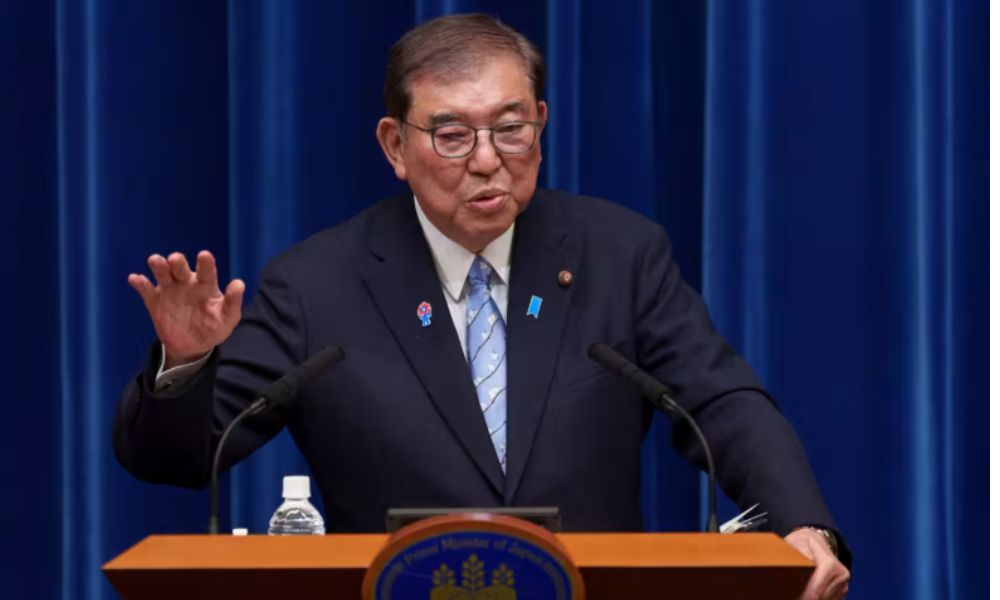
One of Japan PM Ishiba notable and humane plans is to meet stateless people born through their Filipino mothers to Japanese fathers after the Second World War. They have long lived in a legal gray area, with no official citizenship status.
By advocating that Tokyo support its citizenship and welfare, Ishiba adds a humanitarian dimension to the diplomatic trip. This decision is in line with Japan’s continued efforts for historical reconciliation and respect for communities of overseas Japanese descent.
But this high-stakes trip comes during a maritime arms race among regional nations seeking to adapt to growing tensions in the Indo-Pacific region, where China’s flexing of its muscles, notably in disputed waters, is a source of global anxiety. Japan PM Ishiba trip is seen by many as a manifestation of Japan’s broader vision of a “Free and Open Indo-Pacific,” an initiative with a larger focus on maritime security, freedom of navigation, and a rules-based international order.
Japan’s willingness to provide not just defense aid but intelligence-sharing capability reflects a shift away from a passive pacifist posture to a more active regional role, analysts say.
Vietnam, which shares a long coastline on the South China Sea, and the Philippines, with many unresolved maritime conflicts, are similarly well placed to gain from closer security relations with Tokyo.
All this sets the stage for Japan PM Ishiba upcoming visit, because Japan wants to be seen not just as an economic heavyweight but also as a credible security partner in Southeast Asia. When Japan invests in military cooperation with other countries and displays some goodwill regarding historical issues, it is laying the groundwork for a good, long-term strategic alliance.
With tensions surrounding China continuing to rise, Japan’s reinvigorated partnership with Vietnam and the Philippines will likely start to impact the security environment in the region, highlighting a multilateral approach to stability, preservation of freedom of navigation, and peace in Asia.
Image Cover: CNA
Image Body: Reuters


